2026-11-23 ·
How Winter Furnace Use Affects Air Ducts In Colorado Springs Homes
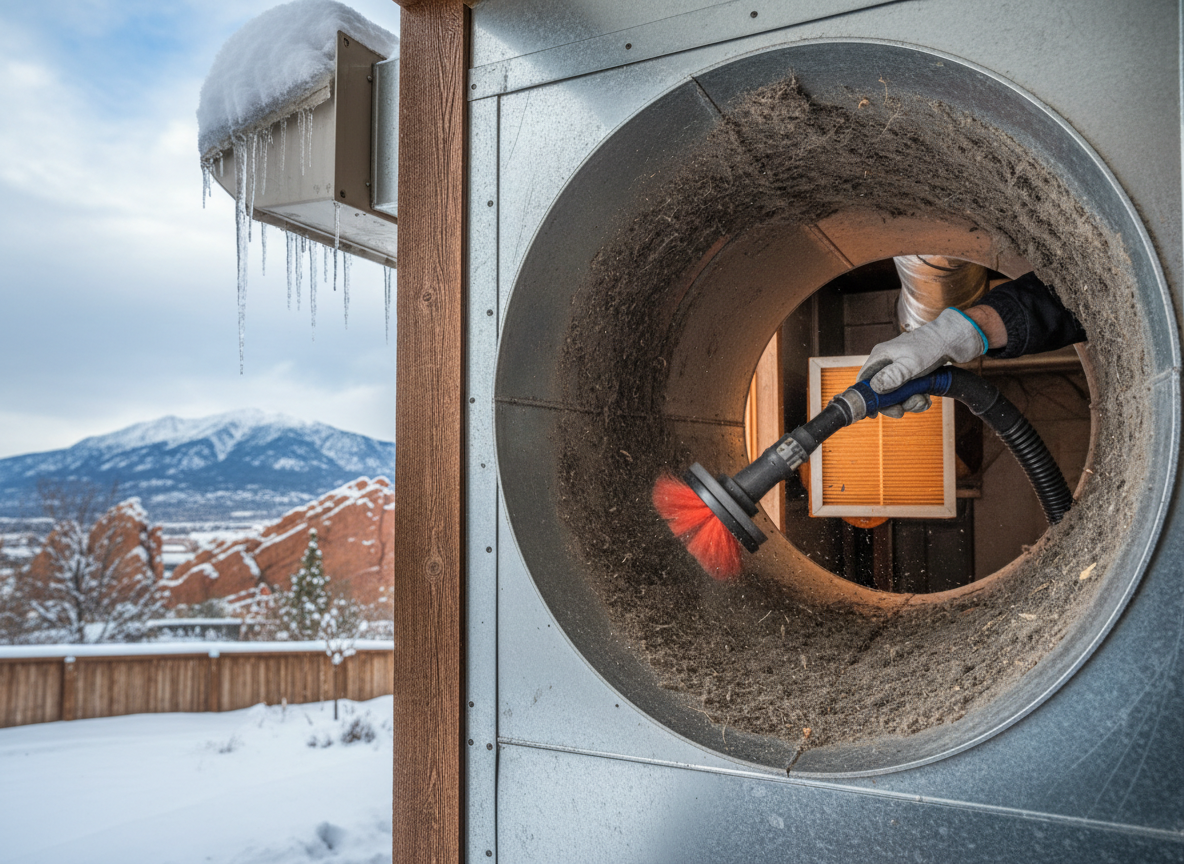
Winter furnace operation in Colorado Springs homes moves larger volumes of dry air through ducts for extended periods because the semi-arid high-plains climate brings cold temperatures that keep heating systems running many hours each day. This increased airflow picks up loose particles that settled during milder months and carries them into living spaces, especially in homes with older metal ductwork common in established areas like Old Colorado City and Manitou Springs. The effect shows up most clearly after the first hard freeze when homeowners notice more dust on surfaces shortly after the furnace cycles on.
Longer Furnace Cycles and Particle Movement
In El Paso County the shift from fall to winter often means furnaces run continuously for weeks rather than cycling on and off. Each extended cycle pulls air from return vents and pushes it through supply ducts, stirring any accumulated dust, pet hair, or construction debris left from previous seasons. Homes near Pikes Peak or Cheyenne Mountain experience slightly stronger winds that can introduce extra outdoor particles through small leaks in duct joints. Over time this repeated movement concentrates finer dust near registers in bedrooms and living rooms, making the air feel heavier until the ducts are addressed. Residents in Broadmoor and Rockrimmon report similar patterns in homes built before the 1990s where duct seams were not sealed as tightly as newer construction.
Low Humidity and Duct Material Stress
The region's cold winters drop indoor relative humidity well below 30 percent once furnaces run daily, drying out both the air and any organic material inside the ducts. This dryness makes settled dust lighter and easier to dislodge while also causing minor expansion and contraction in metal ducts that can loosen tape or mastic at joints. In neighborhoods such as Briargate, where many homes have crawlspace or attic duct runs exposed to temperature swings, the constant dry airflow can accelerate small cracks that allow more unfiltered air to enter the system. The result is a gradual increase in the amount of fine particulate that reaches living areas rather than staying trapped in the duct walls.
Practical Steps for Homeowners in Colorado Springs
Homeowners can reduce the impact by replacing furnace filters every 30 to 45 days during peak winter months and scheduling a full Furnace And Duct Cleaning before the first sustained cold snap. Checking accessible duct sections in basements or attics for gaps and sealing them with proper mastic prevents additional outdoor dust from entering. Those living near Security-Widefield or Fountain often see extra pollen and road dust carried in by prevailing winds, so inspecting return vents after windy periods helps catch buildup early. For a deeper look at cost factors that influence professional cleaning in the region, see the article What Influences Air Duct Cleaning Cost In Colorado Springs.
Differences Across Local Housing Stock
Older homes in Old Colorado City and Manitou Springs typically contain rigid metal ducts with more surface area for dust to cling to compared with newer flex-duct systems in Briargate subdivisions. These older runs also sit closer to ground level where soil and leaf debris can enter through unsealed joints during dry winter winds. Newer homes near the United States Air Force Academy often have better-sealed systems but still accumulate fine dust from the high-plains air when the furnace operates 12 or more hours daily. Checking registers in multiple rooms after a week of below-freezing temperatures reveals where the heaviest movement occurs and guides targeted cleaning rather than whole-house work every season.