2026-11-23 ·
Inspecting Ducts After Wildfire Smoke Events Near Colorado Springs
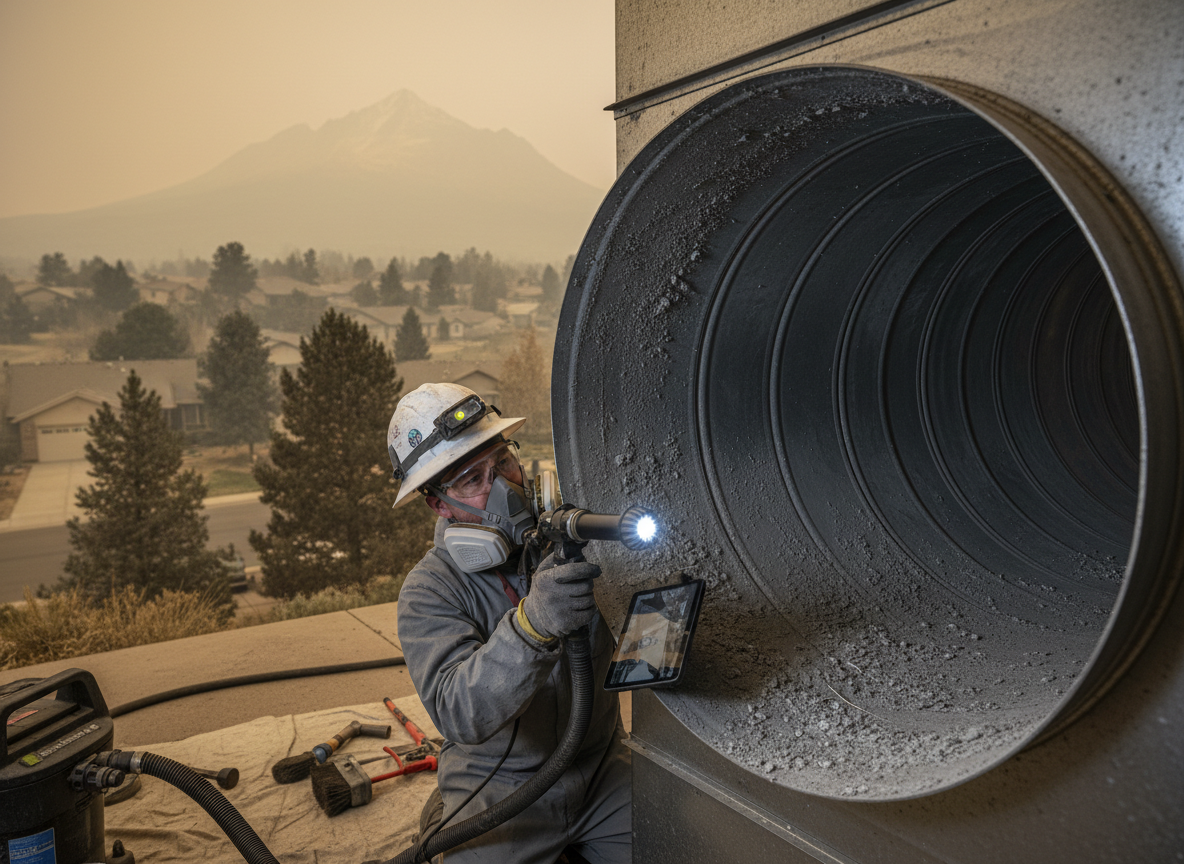
After wildfire smoke events near Colorado Springs, begin duct inspection by checking for visible soot films and odors in the main trunk lines within 48 hours of the smoke clearing, as the semi-arid high-plains climate allows particles to remain airborne longer before settling. This timing prevents re-circulation when heating systems activate during cold winters. Homes in Broadmoor and Manitou Springs often show heavier buildup due to older ductwork and proximity to Pikes Peak wind patterns that carry smoke from surrounding foothills.
Identifying Smoke Residue in Local Duct Systems
Wildfire smoke in El Paso County carries fine ash that infiltrates supply and return ducts, especially in neighborhoods like Rockrimmon and Briargate where homes sit on slopes exposed to Pikes Peak winds. Look for dark streaks around registers and a persistent campfire smell that lingers after airing out the house. In older stock found in Old Colorado City, metal ducts with seams collect residue faster than newer flex lines. Check the blower compartment first, then run the system on fan-only for two minutes and inspect filters for gray discoloration. These signs indicate particles have traveled through the full system serving homes near Garden of the Gods and Cheyenne Mountain.
Step-by-Step Inspection Process for Colorado Springs Homes
Start at the air handler located in attics or basements common to Briargate properties. Remove the filter and shine a flashlight into the plenum to spot ash layers on coil surfaces. Next, open several supply vents in different rooms and use a mirror or borescope to view interior walls for soot deposits. Test airflow at each register with a handheld anemometer; reduced velocity often signals blockages from smoke particles. In homes near the United States Air Force Academy, include the return ducts that pull air from crawlspaces where ash can accumulate during dry summer months. Document findings with photos before any cleaning begins.
Impact of Local Climate and Terrain on Smoke Contamination
The semi-arid high-plains climate around Colorado Springs creates temperature swings that cause smoke particles to expand and contract inside ducts, embedding them deeper during hot summer days followed by cold winter nights. Wind patterns from Pikes Peak push smoke into valleys affecting Security Widefield and Fountain homes more than central areas. Soil conditions in El Paso County add dust that mixes with ash, forming a heavier residue in crawlspace ducts of Pueblo-adjacent properties. These factors mean inspections must account for seasonal heating cycles that redistribute particles after each wildfire event.
When to Schedule Professional Follow-Up Inspection
If residue appears beyond the first few feet of duct runs or odors persist after basic filter changes, contact a local service for detailed assessment. Properties in Manitou Springs with historic construction often require access through multiple points due to complex layouts. Review related guidance on Spring Pollen And Pine Needle Debris In Colorado Springs Ventilation for seasonal comparisons. Consider Emergency Air Duct Cleaning when smoke events coincide with high pollen periods. Also read What Influences Air Duct Cleaning Cost In Colorado Springs to understand variables specific to post-wildfire work in the region.