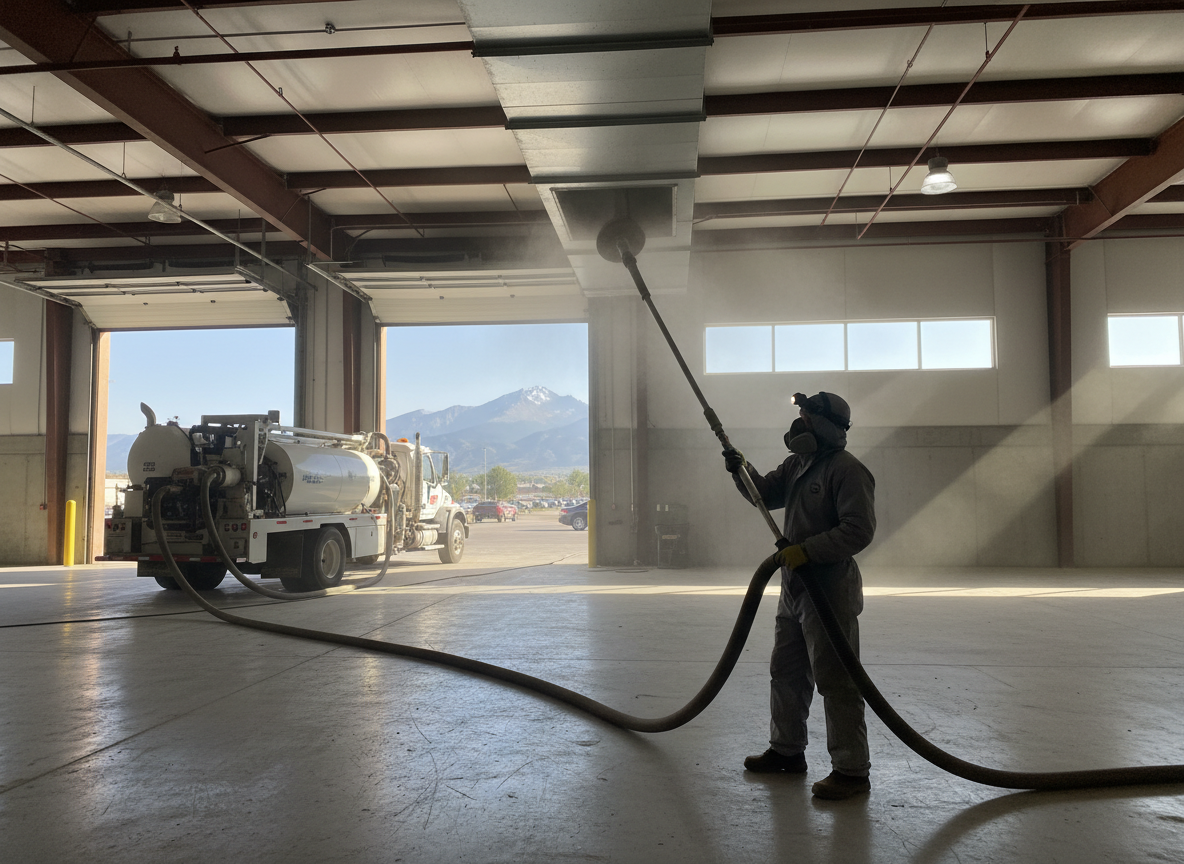
Commercial properties across El Paso County deal with constant dust infiltration from the semi-arid high-plains climate. Hot summers pull fine particles through rooftop units while cold winters drive more indoor circulation, packing debris into larger duct runs typical of office buildings in Briargate and Rockrimmon. Older stock near Old Colorado City often features metal trunk lines with limited access panels that trap material against the walls, requiring technicians to work from both supply and return sides without disturbing tenant operations.
Buildings near Garden of the Gods or Cheyenne Mountain sit at varying elevations where wind patterns push additional grit into intakes. Commercial systems here frequently combine multiple air handlers serving different floors, so a single missed section can recirculate contaminants for months. Technicians must map each branch, account for fire dampers, and use negative-air machines sized for the actual cubic footage rather than generic residential equipment.
Access challenges increase in structures around the United States Air Force Academy or Manitou Springs where roof-mounted equipment sits on steep terrain. Crews coordinate with property managers to schedule after-hours work and protect finished ceilings during equipment movement. Proper sealing of access points after cleaning prevents the rapid re-accumulation common when winter heating cycles begin.
Soil conditions in the region contribute to alkaline dust that clings to coil fins and duct interiors more aggressively than in lower-elevation areas like Pueblo. Regular commercial cleaning restores airflow efficiency and reduces strain on larger blower motors that run longer during temperature swings.
Technician insight
In Colorado Springs, the thing that catches most people out with Commercial Air Duct Cleaning is how quickly alkaline dust from our semi-arid climate packs into the larger trunk lines of buildings in neighborhoods like Broadmoor or near Pikes Peak. Older commercial stock often has narrow access points that force slower, more careful work to avoid damaging dampers.
Office Complex Near Briargate
A multi-tenant office building showed declining air quality complaints during winter heating cycles. Inspection revealed heavy dust layers in the main trunks feeding several floors. We isolated sections, ran negative air, and cleaned branch by branch. Airflow measurements improved and tenant reports dropped after the service.
How it works
- 1
Site Assessment
Walk the full system in the commercial space, note duct layout, access points, and any visible buildup from local dust sources.
- 2
Containment Setup
Install negative-air machines and seal work areas to keep debris from migrating into occupied tenant spaces during cleaning.
- 3
Mechanical Cleaning
Use rotary brushes and compressed air tools sized for commercial duct diameters, working from each accessible opening in sequence.
- 4
Final Verification
Inspect cleaned sections with cameras, confirm airflow restoration, and document condition before restoring normal HVAC operation.
Pricing
Commercial pricing depends on system size, number of air handlers, and access difficulty in multi-story or older El Paso County buildings.